
This week’s post is a deep dive on Greg McKeown’s daily planning system (Greg is author of Essentialism: The Disciplined Pursuit of Less)
It’s very easy to get in the trap of feeling you have an infinite to-do list. It’s always easier to think of ideas than to execute on them. While having ambitious targets can drive success, never being able to close off all those items can reduce satisfaction.
I’m a firm believer in building momentum and ticking off tasks is a great way to build in a positive reinforcement cycle.
Task lists are often used to great effect in project planning where the goal is fixed and known. But how do you adapt this into your daily schedule?
1. The Problem With Daily Task Lists
It’s too easy to keep adding more items to the list and the day’s work is then never done. The trick is to incorporate a common aspect from development processes. What’s the definition of done?
If you don’t know what done looks like you cannot be done. So without having this definition your day is guaranteed to fail. Not a great place to be.
It’s far too easy for smaller admin tasks to drown out your core priority. Or for scope creep where you keep expanding your most essential task so it’s never quite finished.
2. The Essentialist’s Daily Planner
For full details of the planner take a look here: https://gregmckeown.com/books/the-essentialism-planner/
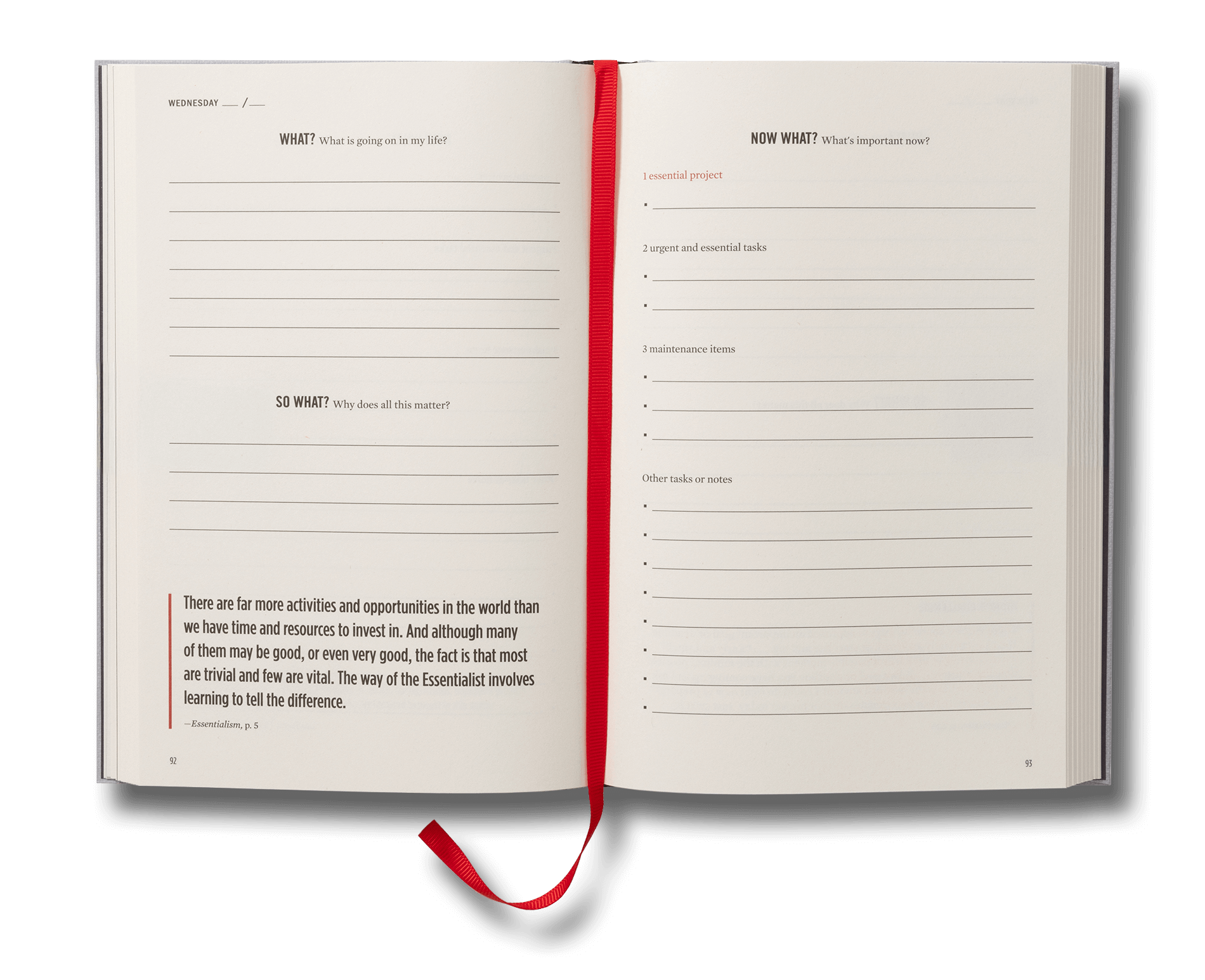
The core of the daily planning ritual is:
“What? What is going on in my life?
So What? Why does all this matter
Now What? What’s important now?
1 essential project
2 urgent and essential tasks
3 maintenance items”
“Insecure overachievers can endlessly complicate any task to an infinite degree” (Greg McKeown)
Don’t get caught in that trap! Defining done makes it clear and easier to tick off so you can move to the next point.
It’s easy to jump straight to the concrete checklist but the journal also has a “What?” and “So What?” section. This is a great place for brainstorming, to jot notes and write potential options out before you commit to your list.
3. Focus Tasks vs Urgent Interruptions
There’s often a tension between working on something strategic vs completing a smaller urgent task. And the best way to avoid a lot of urgent busy work is to stay ahead of the game. I love the mix in this planner.
Number 1 task is the strategic non urgent piece of work. Ensure you block time for this and protect it from interruptions.
The 2 urgent and essential tasks keep you responsive without drowning in reactive work.
The 3 maintenance items handle the necessary but smaller tasks that keep things running.
This fits really well with my earlier post on reducing procrastination. Pro-actively plan your day with Greg’s 1-2-3 planner, then use the 5-4-3-2-1-Go countdown to execute on what you’ve planned.
My takeaways:
Define what “done” looks like before your day starts, or you’re guaranteed to fail
Split your essential strategic/project/creative work out from the urgent tasks
Before committing brainstorm and journal the background
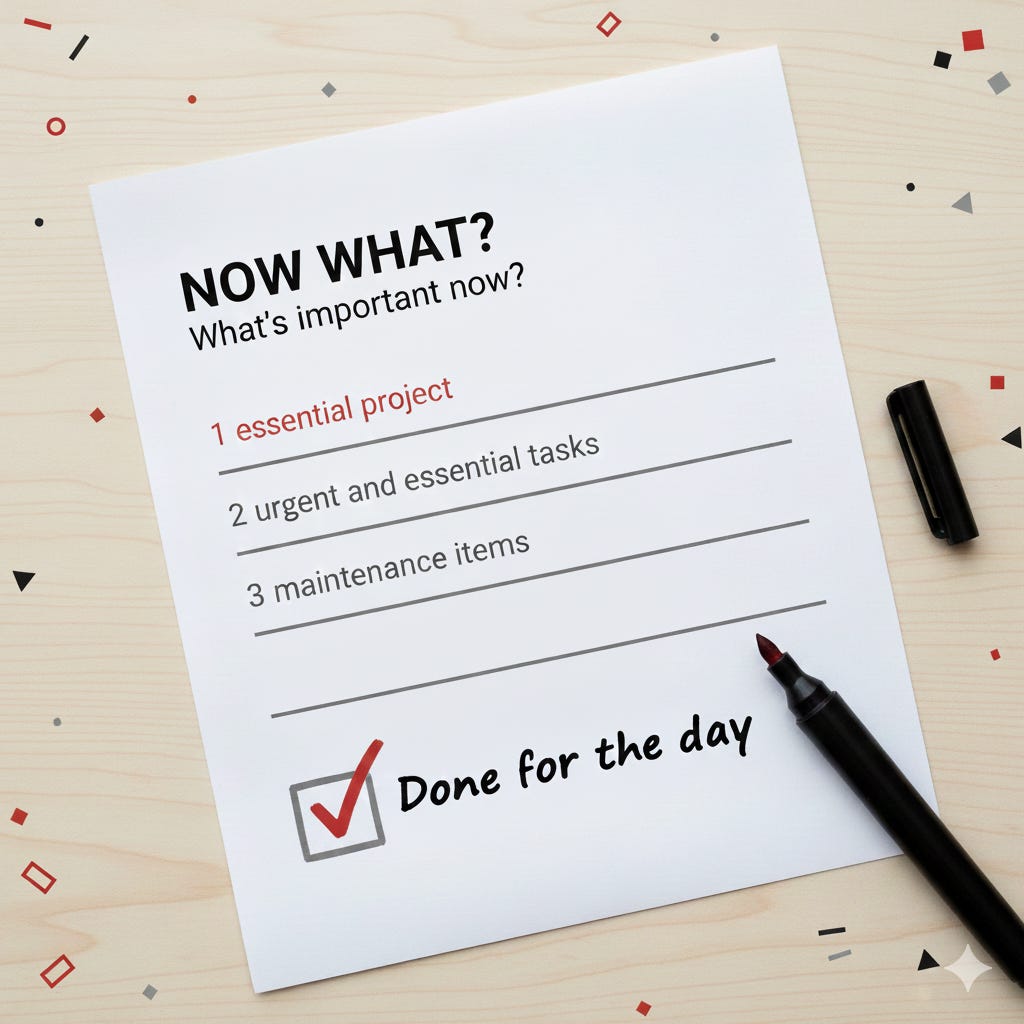
Posting this means I’ve done my essential task for the day! Time to tick the box and celebrate.
Have a great week.